Poker might look like a game of luck, but ask any pro, and they’ll tell you it’s a game of skill, timing, and smart decisions. For beginners, though, it can feel overwhelming: which hands to play, when to fold, what position you're in, it’s a lot to track.
That’s where poker cheat sheets come in. These handy guides take the guesswork out of the game, giving you instant clarity on what to do next. Whether you’re learning at a kitchen table or playing poker on the best online casino, a cheat sheet can quickly level up your play.
This blog breaks down the key cheat sheets every beginner should know — from hand rankings to starting hand rules and position-based strategies. We’ll also show you how to use them effectively so you can start making smarter plays and even win real money online with confidence.
Ready to stop guessing and start playing like a pro? Let’s get into the fundamentals every new player needs to know.
Poker Hand Rankings – The Must-Know Chart
Every poker decision starts with knowing how your hand ranks. Without this foundational knowledge, even the best strategy won’t help you. A poker cheat sheet with hand rankings is essential, especially when you're just starting or playing fast-paced games at casinos online.
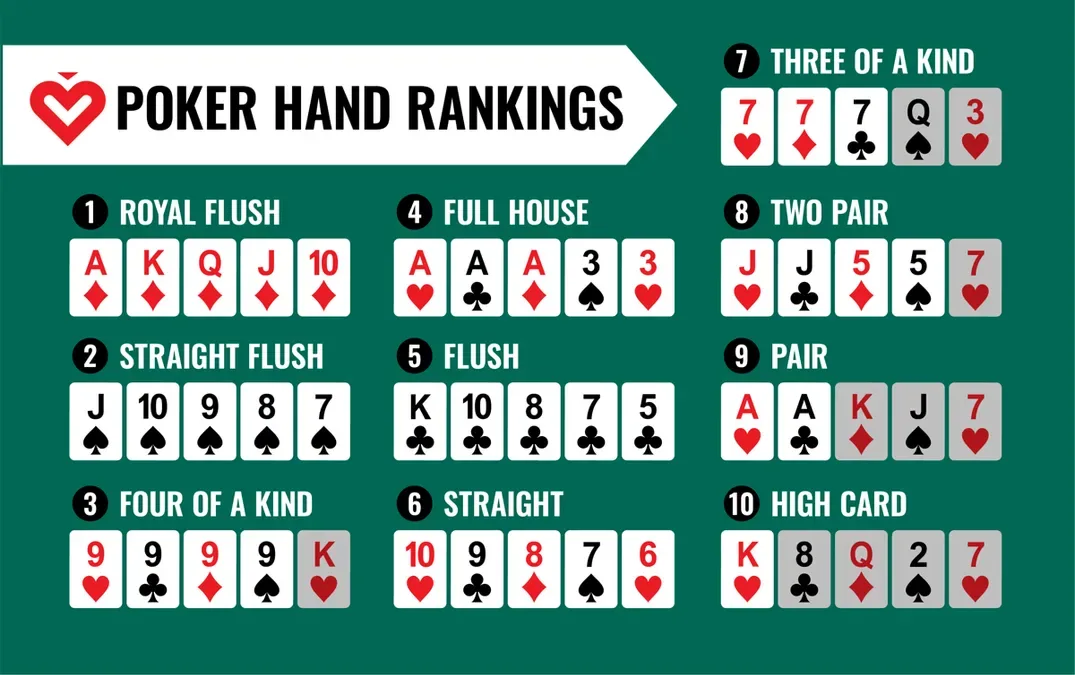
Below are the standard poker hands, ranked from strongest to weakest:
-
Royal Flush
A, K, Q, J, 10 — all same suit (e.g., hearts). The unbeatable hand
-
Straight Flush
Five consecutive cards of the same suit (e.g., 5–6–7–8–9 of spades)
-
Four of a Kind
Four cards of the same rank (e.g., 9–9–9–9–2)
-
Full House
Three of a kind + a pair (e.g., Q–Q–Q–7–7)
-
Flush
Five cards of the same suit, any order (e.g., 2–6–9–J–K of diamonds)
-
Straight
Five consecutive cards of any suit (e.g., 3–4–5–6–7)
-
Three of a Kind
Three cards of the same rank (e.g., 8–8–8–K–2)
-
Two Pair
Two pairs (e.g., J–J–5–5–Q).
-
One Pair
One pair (e.g., 10–10–K–7–4)
-
High Card
If no other hand is made, the highest card wins (e.g., Ace high)
Learning these hand rankings is non-negotiable. Whether you’re in a friendly home game or competing on internet casino games for real money, knowing what beats what helps you make confident, profitable choices.
Understanding Betting Rounds & Table Terms
Before you can bluff or raise like a pro, it’s essential to understand how poker betting works. Whether you're seated at a casino table or clicking chips at the best online casino, these rounds and terms apply.
Poker Betting Rounds
-
Pre-Flop
-
After hole cards are dealt.
-
Players decide to call, raise, or fold based on their starting hand.
-
Flop
-
Three community cards are dealt face-up.
-
Another round of betting follows.
-
Turn
-
A fourth community card is revealed.
-
Time for more bets or folds.
-
River
-
The final community card is dealt.
-
Last chance to bet or bluff.
-
Showdown
-
If more than one player remains, cards are revealed, and the best hand wins.
Common Poker Terms
-
Check: Decline to bet, but stay in the hand.
-
Raise: Increase the bet amount.
-
Call: Match the current bet.
-
Fold: Give up your hand and forfeit the round.
-
Pot: The total chips wagered in the hand.
-
All-In: Bet your entire stack. Risky but powerful.
These rules and terms are universal across platforms, whether you're enjoying casino games win real money at a live venue or navigating casinos online. Mastering this language makes every poker decision smoother.
Poker Position Cheat Sheet – Where You Sit Matters
In poker, your seat at the table is as important as your cards. This concept is called “position,” and it heavily influences how you play each hand, especially when playing at casinos online or at the best online casino platforms, where action moves quickly.
Here’s a cheat sheet to understand table positions and how to approach them:
Early Position (EP)
-
Includes the first 2–3 players to act.
-
You must act before others, making this the least favourable spot.
-
Play only premium hands like high pairs and AK.
Middle Position (MP)
-
Slightly better than EP, with more players going after you.
-
Allows for more flexibility — suited connectors or medium pairs can be played here.
Late Position (LP)
-
Includes the cutoff and the dealer/button.
-
Most powerful position — you see what others do before you act.
-
Great for stealing blinds, bluffing, and playing a wider range.
The Blinds (SB & BB)
-
Forced bets that act first post-flop.
-
Play cautiously — you're often investing chips without seeing your cards first.
Knowing your position helps you make better decisions and avoid costly mistakes. Combine this with a solid poker cheat sheet, and you're well on your way to playing smarter, whether at home or in internet casino games for real money.
Starting Hand Guidelines for Beginners
One of the most common beginner mistakes in poker is playing too many hands. The truth is, most hands should be folded, especially in early position. This is where a poker cheat sheet becomes your best friend.
Use the guide below to simplify your decision-making at any table, whether you're at a local tournament or playing on the best online casino to win real money online.
Hands You Should Play (Especially in Early Position)
-
Pocket Pairs: AA, KK, QQ, JJ, 10–10
-
High Suited Cards: AK suited, AQ suited, KQ suited
-
Strong Off-Suit Combos: AK, AQ
Marginal Hands (Playable in Middle to Late Position)
-
Medium Pairs: 88, 99
-
Suited Connectors: 10–9 suited, 9–8 suited
-
Ace-X Suited: A–10 suited, A–9 suited
Hands to Avoid (Especially in Early Position)
-
Low Off-Suit Cards: 7–2, 8–3
-
Unconnected Low Cards: 4–9, 5–10
-
Weak Ace-X Off-Suit: A–6, A–8 off-suit
Remember: your position and table dynamics matter just as much as your cards. Don’t fall into the trap of thinking every Ace is a good hand. Stick to this list, practice in free bonus games no deposit, and refine your skills before playing at higher stakes.
Final Tips: Practice Smarter, Not Just More
Learning poker isn’t about playing hundreds of hands blindly — it’s about practising with intention. Start with low-stakes games or even free poker options at the best online casino platforms to build confidence without risking much.
Review your plays after each session. Ask: “Did I follow my cheat sheet? Could I have played that hand better?”
Cheat sheets aren't crutches — they’re training wheels that help you make smarter choices until reading situations become second nature. As you improve, you'll make fewer mistakes and spot more opportunities to win real money online with a consistent strategy.
Remember: Pros don’t just play a lot. They play with purpose.
FAQ
What is the best poker cheat sheet for beginners?
Start with a basic chart that shows hand rankings, playable starting hands by position, and simple betting rules.
Can I use poker cheat sheets at a casino?
Yes! They're perfectly legal. Just be discreet if you're playing live, and always follow house rules.
Is online poker good for learning?
Absolutely. Casinos online offer lower stakes, faster hands, and often display betting guidance, making them perfect for practice.
Can I win real money from poker using these tips?
Yes — especially if you follow proven strategies, manage your bankroll, and learn from each session. Many players win real money online by starting small and playing smart.

Casino
Play the Best Real Money Online Casino Sites in 2026
Jan 6, 2026

Slots
Best Frankenstein Slots Online: Top 10 Games for Horror Slot Fans
Dec 8, 2025

Poker
Best Strategies for Winning Bomb Pots in Live & Online Poker
Dec 12, 2025